
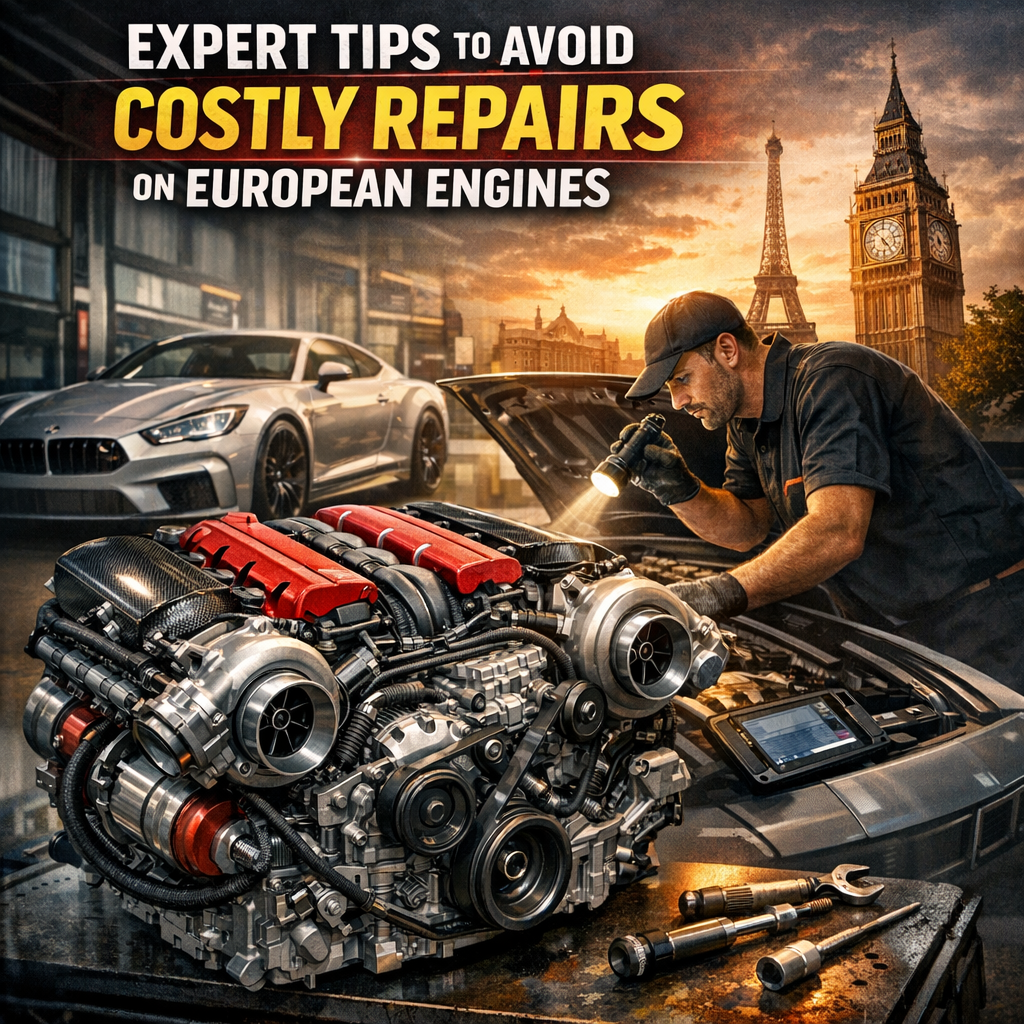
Expert Tips to Avoid Costly Repairs on European Engines
Expert Tips to Avoid Costly Repairs on High‑Performance European Engines
High-performance European engines are built to deliver precision, power, and an exceptional driving experience. Brands like BMW, Mercedes-Benz, Audi, Porsche, and Jaguar are known for engineering that feels refined and responsive. But that performance also comes with a responsibility: these engines often require more care than a typical commuter vehicle.
The good news is that many expensive repairs can be avoided with the right habits. If you want to protect your investment and keep your car running at its best, these expert tips can help you prevent problems before they start.
Understand What Makes These Engines Different
European performance engines often use advanced technologies such as turbocharging, direct injection, variable valve timing, and complex cooling systems. These systems improve efficiency and power, but they also increase sensitivity to maintenance issues.
That means small problems can become big ones quickly.
Ignoring a minor oil leak, delaying a service, or using the wrong fluid may not cause immediate failure, but over time it can lead to expensive damage. The best way to avoid costly repairs on high-performance European engines is to stay ahead of wear and tear.
Follow a Strict Maintenance Schedule
One of the most important rules is simple: never stretch service intervals beyond what the manufacturer recommends.
Key maintenance habits to follow:
- Change oil and filters on time, or sooner if you drive aggressively
- Replace spark plugs at the recommended interval
- Check and flush transmission fluid when needed
- Inspect belts, hoses, and gaskets regularly
- Service the cooling system before it shows signs of trouble
Many owners wait until a warning light appears. By that point, the issue may already be serious. Preventive maintenance is almost always cheaper than major engine repair.
Use the Right Fluids and Parts
High-performance European engines are designed around very specific tolerances. That means generic fluids and bargain parts can create problems.
Always use:
- Manufacturer-approved engine oil
- The correct coolant type
- OEM or high-quality replacement filters
- Proper brake and transmission fluids
Even something as basic as the wrong oil viscosity can affect turbo performance, fuel economy, and internal engine wear. Saving a few dollars on fluids can lead to thousands in repairs later.
Watch for Early Warning Signs
Catching issues early is one of the smartest ways to avoid major repair bills. If your car starts behaving differently, don’t ignore it.
Common warning signs include:
- Rough idling
- Loss of power
- Strange noises from the engine bay
- Smoke from the exhaust
- Rising engine temperature
- Oil spots under the vehicle
- Warning lights on the dashboard
These symptoms may point to problems with the ignition system, turbocharger, cooling system, or sensors. The sooner you diagnose them, the less likely they are to turn into something worse.
Don’t Overlook the Cooling System
Heat is one of the biggest enemies of high-performance engines. European engines often run hot by design, especially turbocharged models. If the cooling system is neglected, the engine can suffer severe damage.
Inspect the radiator, thermostat, water pump, and coolant lines regularly. Replace coolant according to schedule, not just when it looks dirty. If the temperature gauge rises higher than normal, have the system checked immediately.
A small cooling issue can lead to warped heads, blown gaskets, or even complete engine failure.
Drive with Mechanical Sympathy
How you drive has a major effect on long-term engine health. Aggressive driving is part of the fun of owning a performance car, but constant hard acceleration, abrupt stops, and cold starts can increase wear.
Smart driving habits include:
- Letting the engine warm up before pushing hard
- Avoiding high RPMs until oil reaches operating temperature
- Giving turbocharged engines a brief cooldown after spirited driving
- Not constantly short-tripping the car, which can increase carbon buildup
Performance cars are designed to be driven, but they last longer when driven thoughtfully.
Pay Attention to Carbon Buildup
Many direct-injection European engines are prone to carbon buildup on intake valves. Over time, this can reduce performance, worsen fuel economy, and cause rough running.
Regular inspection and professional cleaning when needed can prevent this issue from becoming expensive. If your vehicle starts to hesitate, misfire, or lose throttle response, carbon buildup could be part of the problem.
Choose a Specialist When Repairs Are Needed
Not every mechanic is equally experienced with European performance engines. These vehicles often require specialized diagnostic tools, brand-specific knowledge, and exact repair procedures.
A general repair shop may miss early signs of trouble or use incorrect parts. A European car specialist is more likely to spot issues quickly and fix them correctly the first time.
That can save you time, stress, and money.
Build a Preventive Ownership Mindset
The most expensive repairs usually come from neglect, not bad luck. Owners who stay proactive tend to spend less over the life of the car and enjoy more reliable performance.
To protect your engine:
- Keep records of all maintenance
- Respond quickly to unusual symptoms
- Use quality parts and fluids
- Stick to factory service intervals
- Work with experienced technicians
Final Thoughts
Owning a high-performance European car should be exciting, not stressful. With proper maintenance, smart driving habits, and quick attention to warning signs, you can avoid many of the costly repairs that catch owners off guard.
A little care goes a long way. Treat your engine well, and it will reward you with the power, smoothness, and precision these vehicles are known for.