
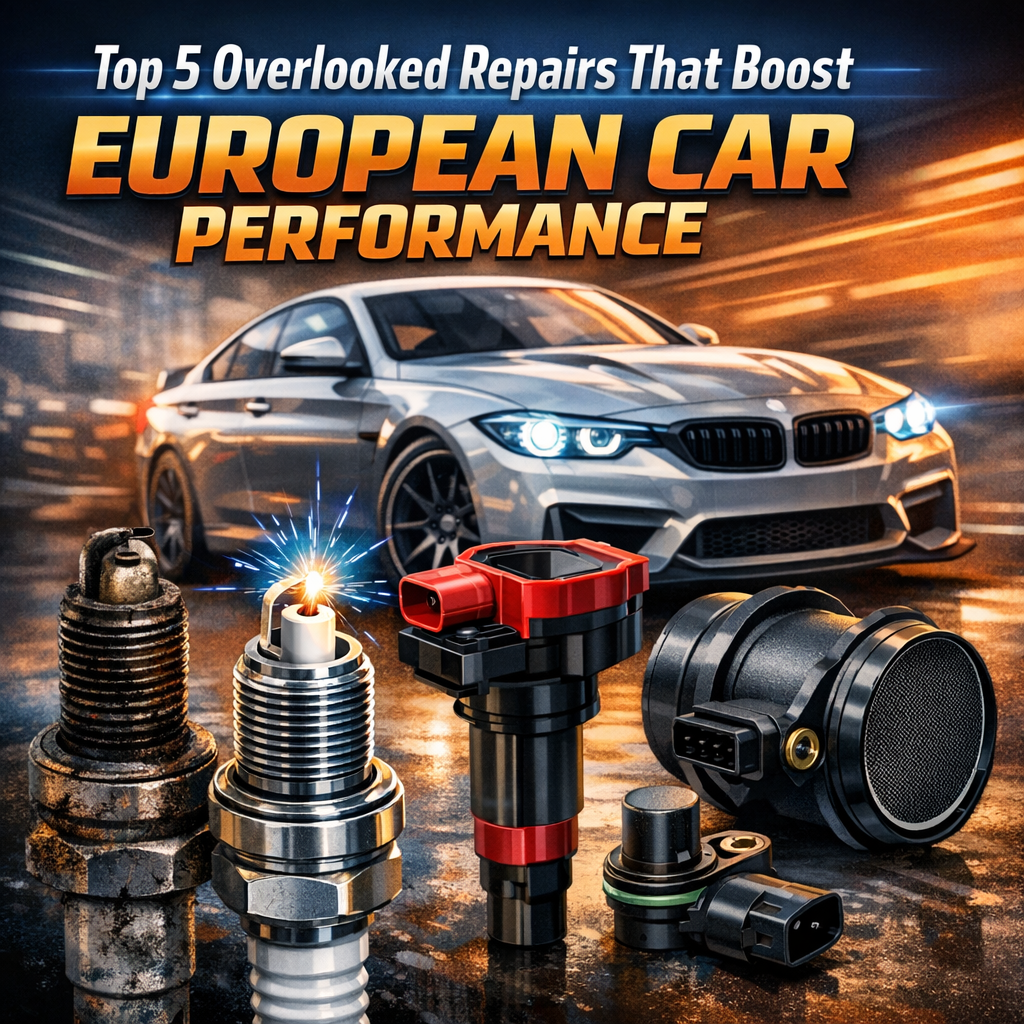
Top 5 Overlooked Repairs That Boost European Car Performance
Top 5 Most Overlooked Repairs That Impact Performance in European Cars
European cars are known for precise handling, refined engineering, and strong performance. But when something feels off, drivers often blame bigger, more obvious issues first. In reality, some of the most important fixes are small, routine, and easy to miss.
If your Audi, BMW, Mercedes-Benz, Volkswagen, Volvo, or other European vehicle feels slower, rougher, or less efficient than it should, the problem may come from a repair that many owners overlook. Here are the top 5 most overlooked repairs that impact performance in European cars.
1. Ignition Components
Why they matter
European engines are often tuned for efficiency and responsiveness, which means they depend heavily on strong ignition performance. Worn spark plugs, failing ignition coils, and degraded wires can create weak combustion, misfires, and poor throttle response.
Common symptoms
- Rough idle
- Slow acceleration
- Engine hesitation
- Reduced fuel economy
- Check engine light
Even if the car still runs, worn ignition parts can quietly rob it of power. In many European models, spark plugs should be replaced on schedule, and coils should be inspected if misfires begin to appear.
2. Air Filters and Intake System Repairs
Why they matter
A restricted airflow path can affect everything from acceleration to fuel consumption. While air filters are easy to forget, a clogged filter can make the engine work harder just to breathe.
The intake system in European cars can also develop leaks, cracked hoses, or loose clamps. These small issues may not seem serious, but they can disrupt the air-fuel mixture and reduce performance.
What to look for
- Dirty or overdue air filter
- Cracked intake hoses
- Whistling sounds from the engine bay
- Sluggish response under acceleration
A clean intake system helps the engine perform as designed. It is one of the simplest ways to preserve performance.
3. Sensor and Electronics Repairs
Why they matter
Modern European cars rely on a network of sensors to manage fuel delivery, timing, emissions, and transmission behavior. When one sensor starts giving inaccurate readings, performance can suffer even if the car seems otherwise fine.
Some of the most commonly overlooked sensors include:
- Mass air flow (MAF) sensor
- Oxygen sensors
- Throttle position sensor
- Crankshaft or camshaft position sensors
How they affect performance
A faulty sensor can cause:
- Poor fuel mixture
- Delayed shifting
- Reduced engine power
- Increased emissions
- Hard starting
Because European vehicles often use advanced engine management systems, sensor-related problems can show up as subtle drivability issues long before a major warning appears.
4. Transmission Service and Small Fluid Leaks
Why they matter
Performance is not just about the engine. If the transmission is not operating smoothly, the car will feel slower, less responsive, and less efficient. Many drivers delay transmission service because the car still shifts “well enough,” but that can be a costly mistake.
Low or worn transmission fluid can lead to:
- Harsh shifting
- Slipping gears
- Delayed acceleration
- Heat buildup
- Premature wear
Small leaks, big consequences
European vehicles are especially sensitive to fluid condition and proper service intervals. Even a slow leak from a pan gasket, seal, or cooler line can eventually cause major performance issues. Catching and repairing these leaks early can protect both drivability and the transmission itself.
5. Brake Drag and Wheel/Axle Issues
Why they matter
When a brake caliper sticks or a wheel bearing begins to fail, the car may still drive normally at first. But these problems create resistance, making the engine work harder and reducing overall performance.
A dragging brake can create:
- Reduced fuel economy
- Pulling to one side
- Uneven heat from the wheels
- A burning smell after driving
Wheel bearings, CV joints, and axle components can also affect how smoothly power reaches the road. If these parts wear out, you may notice vibration, noise, or a loss of efficiency.
Why it is often missed
Because these repairs are not always associated with “engine performance,” they are easy to overlook. Yet they can make a healthy engine feel underpowered. A full inspection of the braking and driveline systems can reveal issues that are quietly holding the vehicle back.
Keep Performance at Its Best
European cars often give early warnings when something is wrong, but the signs are not always dramatic. Small repairs can have a big impact on how your vehicle accelerates, shifts, idles, and responds on the road.
To maintain performance, make sure you:
- Follow scheduled maintenance intervals
- Address warning lights promptly
- Inspect fluid levels and leaks regularly
- Pay attention to unusual noises or vibrations
- Use quality parts suited to your specific model
The top 5 most overlooked repairs that impact performance in European cars are often simple to fix, but ignoring them can lead to bigger and more expensive problems. Staying ahead of these issues helps preserve the smooth, responsive driving experience European vehicles are known for.